My Moves
How I became Fitter for Having it
These moves are drawn from my lived experience. Each one helps me lead a full life with T1D. For more than 40 years they have kept me strong in tough times, and active with a health condition that never takes a day off.
They are simple, they are about good living.
I called them moves because that’s exactly what they are. Not hacks, just practical ways I approach life and stay fit.
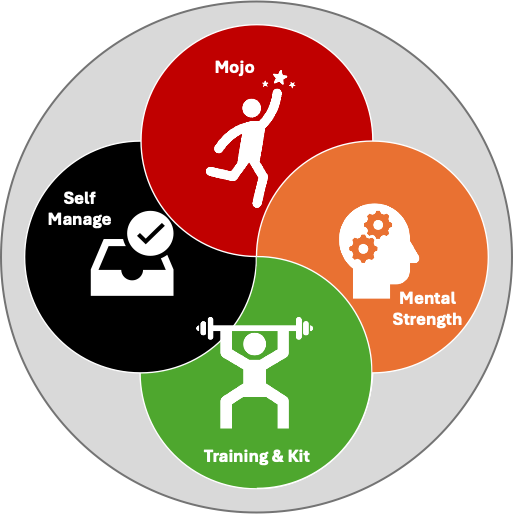
Moves are in four groups
Explore the moves yourself.
We are all different. You may relate to some, or have others that you use.
If you’re already strong on MOJO (motivated) but struggling with consistency look at MANAGEMENT for some basic T1D strategies that work for me. If you’re ready-to-race you might jump straight to MENTAL STRENGTH or TRAINING.
They are all connected. It’s my approach to living well, not a fixed path.
If you are lost start with Mojo - its how I get inspired to exercise, run and follow my dreams.
1. Mojo Moves
It all starts with motivation. Before management and training you need a spark. With these moves I find a reason to exercise when T1D frustrations get in my way.
2. Management Moves
Fundamental moves to support the basics of living with T1D. These moves shape my daily routines for eating, glucose monitoring, energy, and sleep. When these are working well, they build confidence to make everything else possible.

3. Mental Strength Moves
Brain training moves I use to develop resilience and inner problem-solving. I need them to help manage diabetes every day. They help me with everything from getting out of bed on crappy days, to nailing extra-ordinary adventures.
4. Training Moves
Moves that bring it together physically. Don’t be intimidated by the distances I’ve run, these moves on exercise, sport and kit are just as effective for a park run, or playing soccer. They are simple moves to help me perform well.

How they help
Each move is easy to implement. None take much time, special kit, or practice. All they need is action, attitude and application.
Please reach out to me if you want to learn more, or understand the stories behind how I discovered to use them.
They worked for me, and might be just what you’re looking for.
Start moving now
Some moves are included below with examples of how I discovered them.
Please get in touch if you want to know more.
Be safe
These moves are not clinical advice. Always get advice from qualified health professionals.
That is what I do, please do the same.
Working with health care experts is essential before making any change to how you manage your T1D.
Using the moves
1. Mojo Moves | used for inspiration
Move 1.1 | Set a big goal, then tell someone
Audacious, specific, challenging goals create momentum to carry you through the hard days with T1D. Goals keep you future-focused. Also, if you tell someone, big goals provide inspiration, accountability, and encouragement.
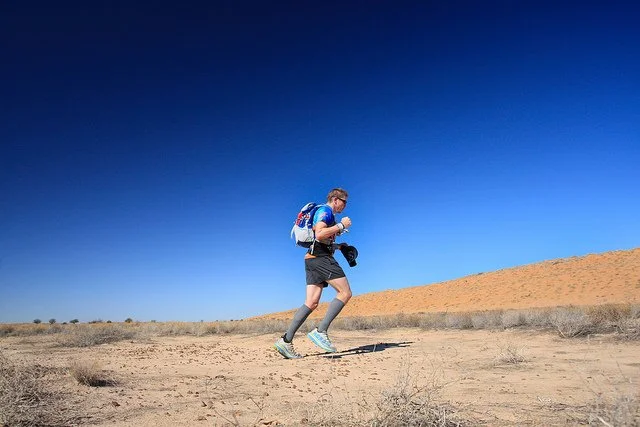
Set a big goal. Read what this long run did for me
Move 1.2 | Be courageous. Continue doing things you love
Dream to be ‘normal’ if that’s what you want, especially early after diagnosis when T1D is new and hard. Once you can handle the crappy bits, and confident in your routines, be brave to return to things you love to do, or re-ignite colourful dreams of your past.
Move 1.3 | Learn from others. Eat T1D stories for breakfast
People living with T1D share stories with a passion and honesty that clinical guides, or textbooks, can’t replicate. Their stories carry emotional weight when grounded in the relentless reality of T1D extras. Seek out stories from your peers. They might reshape what you believe is possible – and what you do about it.
2. Management Moves | used for T1D basics

Move 2.1 | Own it. Tell people about diabetes.
Telling people can feel uncomfortable. It used to for me. Over time T1D becomes an identity and when you own it, life improves. There’s nothing to feel shameful about, or hide. It helps and opens doors to education when you talk about it.
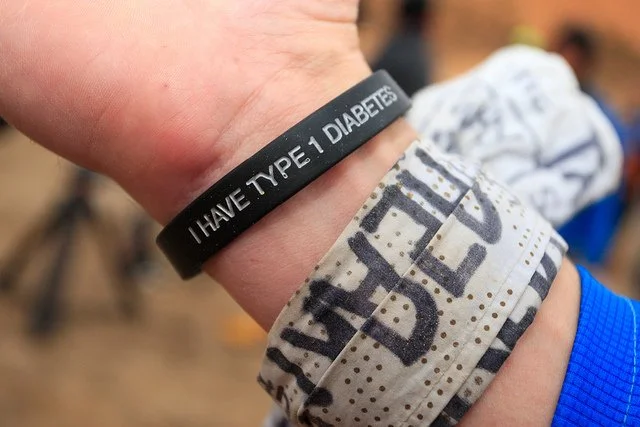
Own it. It can educate you and others
Move 2.2 | Avoid night hypos. Snakes next to the bed
Sleep with a hypo treatment right next to the bed. Sounds obvious, but it took me years to work this out.
Note: This move is essential if you are in a sports team where group training sessions run late into the evening. The likely post exercise low (dropping glucose level) can be dangerous if sleeping alone. Being able to easily reach out for a handful of lollies when you are having a hypo in bed is a safe strategy. What’s yours?
Move 2.3 | Work as a team. Find the right doctors and support
Search for doctors who focus on you, the person, not just the condition. The best healthcare is collaborative. You are the expert on you; they are the experts on diabetes. Tackle problems and explore solutions together.
Insight: My first doctor worked this way, he asked “what do you like doing?” then we worked out how to keep doing those things with T1D. That set the tone for everything that followed. If yours isn’t into partnerships, it's okay to look for someone who is.
Move 2.4 | Be a detective. Keep T1D records, and use them
Record keeping is tedious. Downloading devices, logging what you eat and inject, tracking how your body responds is a grind. But it's also incredibly valuable. When you keep records, you can spot patterns. How your glucose responds after a run? What happens when you eat pizza? Once you identify a pattern, you can act on it, or troubleshoot what's not working. That's when extra work pays off.
3. Mental Strength Moves | used for resilience and agility
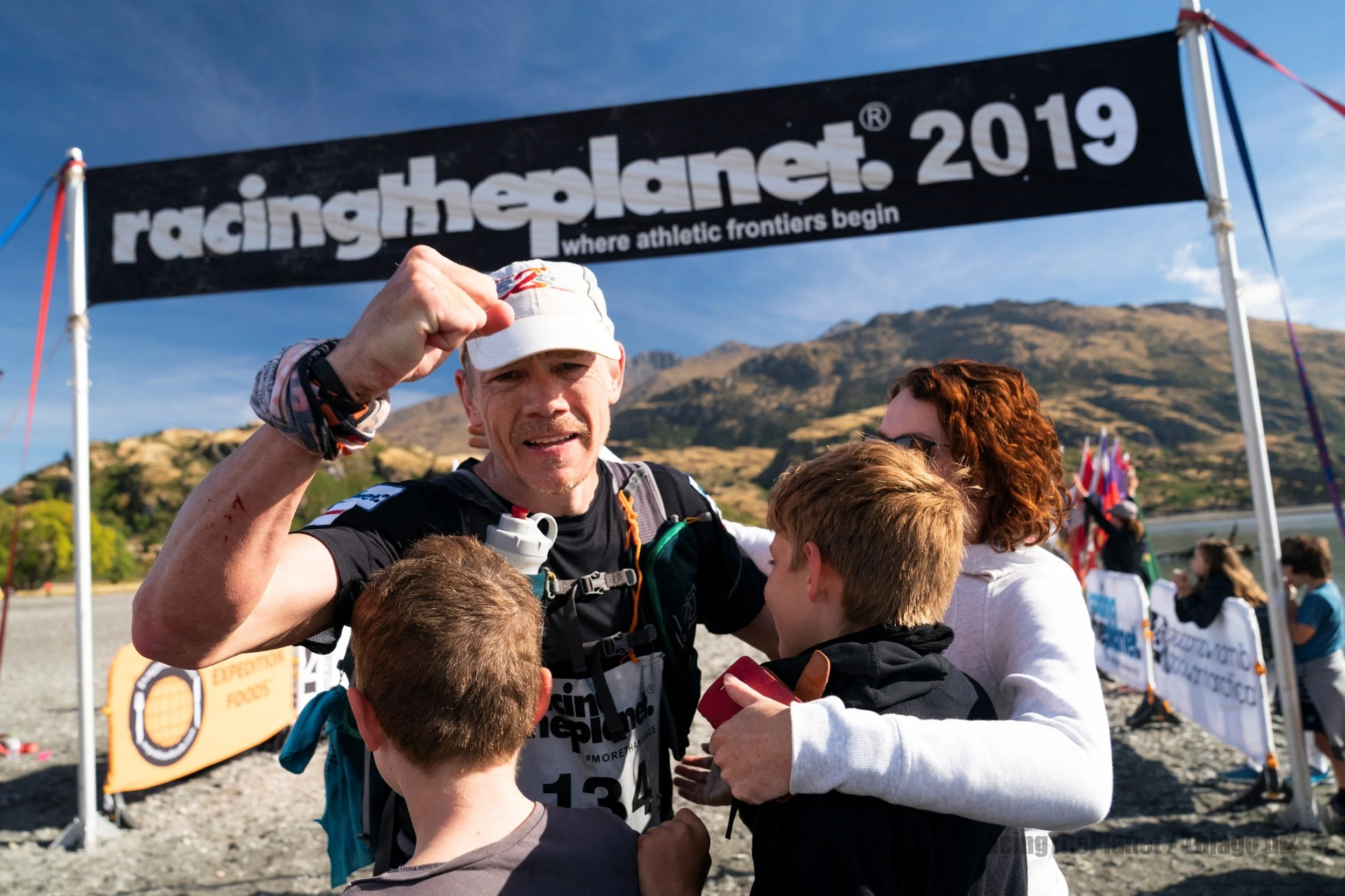
Move 3.1 | Turn difficulties into strengths
Use the obstacles life throws at you, like managing difficult issues with T1D every day, as your greatest sources of strength, determination and problem-solving when you really need them.
Turn difficulties into strengths. Prove naysayers wrong
Move 3.2 | Focus on what you can do
Stop the fruitless folly and don't waste energy reflecting on what you might have done without your medical condition, or life complication. Redirecting that energy towards what you can accomplish is one of the most powerful mental moves you can make.
Move 3.3 | Use naysayers to your advantage
The naysayers never go away. At diagnosis it’s "you can't eat that.” Years later before an ultra-marathon it’s the same “should someone with diabetes really be doing this?” The voices change but the clouds of doubt and negativity remain. But, here’s what I’ve learned: naysayers are surprisingly useful. Each time someone tells me what I can’t do, it adds fuel to my engine.
4. Training Moves | used for performance

Move 4.1 | Double up to squeeze more in
People living with T1D develop extraordinary skills to multi-task. We learn to take blood glucose tests on the run, count carbs while shopping, dose insulin while talking on the phone, work while waiting for appointments, change pump-sets and needle tips watching TV. You can apply this to the big things in life too.
Double up your training time with the other passions in life: have walking meetings at work, jog round the pitch when watching partner or kids play sport, take up a sport with your friends. Bundling your friends, family, work, and health together is the only way you can fit everything in.
Move 4.2 | Do what you can, when you can
Life is full. Preparing a training plan in advance with set days and fixed times works for some people, but it can also disincentivise you if things come up and you miss a few sessions. Instead, just do what you can , when you can.
Insight: I’ve prepared three month forward-looking training plans for what I want to do leading up to a race or event before. They are great for motivation - but I don’t get fixated on them. This is key, because from experience I know that life and diabetes will get in the way. I don’t worry about missing a session, or two; I just overwrite it in my ‘live plan’ as a ‘Rest Day’ and update it with what I’ve actually done. Then, as I draw closer to the event looking back at what I’ve actually done is motivating and doubles up as good record keeping.
There are more training moves tailored to individuals and their exercise appetite and kit requirements. Just ask me.